Before closing a Binance account, open the files you have saved. A download link in an email may still work today, but it is not a local copy; a file in your Downloads folder may cover only the latest month. Check both what you have and whether you can read it.
If the account is already closed, Binance has described a service for requesting transactional reports. Check the current eligibility, identity verification, and available reports through that official service. It offers a way to request data, not to restore the account, and it may not supply every historical field. While you can still sign in normally, save the records you need.
Clarify whether you mean inactivity, disabling, or closure
Stopping use, a security-related disabling function, and permanent closure may be different actions. Read the current page's consequences before choosing one.
Binance's closure instructions describe closure as irreversible. You can save your records first and decide whether to submit the request after checking your circumstances and the actual account state.
If there is an active security concern, follow verified official security and support procedures. Archiving does not require you to disclose passwords, identity documents, verification codes, or remote-control access to REKQO.
List the required history, not just the latest month
Start with the dates you need and the products you actually used. Recent files may be easiest to find, but earlier records may explain where assets came from and how later balances developed.
List the relevant main account, sub-accounts, Spot, Funding, and other products. For each, note the dates needed, files already saved, and anything still to request. Use separate labels for a service you never used, a period you checked with no activity, and records you cannot yet obtain.
Several exports may be needed for a long history. Check the date choices and download limits currently shown in your account, then plan the intervals. After downloading, compare the ends of adjacent files to check for gaps or overlap. The limits in an older tutorial may have changed.
| Record | Purpose | Check |
|---|---|---|
| Asset movement originals | Explain changes over time | Scope and readability reviewed |
| Relevant product details | Explain trades and conversions | Primary and supporting roles defined |
| Required snapshots | Preserve reference states | Times and wallets identified |
| Fees and actual reward records | Explain affected assets | No duplicate counting |
| Support notes | Continue unresolved issues | References and evidence retained |
What happens after downloading?
Keep the original download untouched and inspect a copy:
- Open the file. If it is compressed or encrypted, check that you can extract or read it.
- Check the account, assets, and dates. Is this the activity report you need, or just an order list?
- Find a known event. Pay particular attention to the start and end of the period and to products you used less often.
- If expected records are absent, revisit the filters and report description before treating the file as complete.
Save the file itself even if you keep its download link for reference. Store any information needed to decrypt or recover it securely, separately from material you may share.
How should the archive be organized?
Keep a file list that explains which accounts and dates each file contains, and which version you used. Later, you should be able to identify the right file without signing in again.
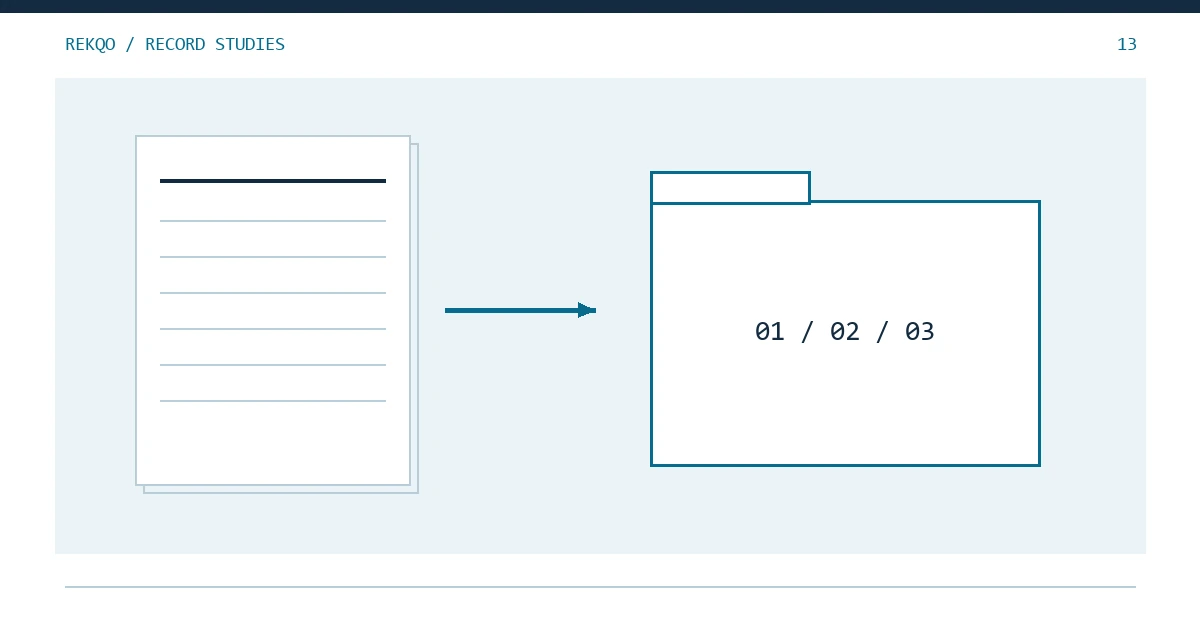
Four folders can be enough: originals, working copies, results, and unfinished questions. Save direct downloads in originals. In the working copies, explain unfamiliar columns and your classifications. Put the completed quantity checks in results, with a note of the accounts included. Give missing records their own entry in the task list.
When you download the same month twice, note which file you used and why the other remains. A product report that explains a movement already counted elsewhere can be marked “reference only; not added again.” That short note prevents the same activity being counted twice when you return to the folder.
Must every difference be zero before closure?
Use the time while you can still sign in to investigate differences and obtain missing records. You may not resolve every question immediately, but you can leave a specific task to continue.
Suppose, in a fictional example, your calculation is 2 units higher than the closing balance. Check whether the dates and accounts match, then look for fees or missing activity. If the cause remains unclear, write “2-unit difference still under review” and retain any support reference. Classify it as a fee only when you find a record that explains it.
You also need to check actual balances, unfinished activity, liabilities, and the platform's other closure conditions. Completing the paperwork does not settle those account obligations.
What state evidence should be retained?
Save the latest records you can verify for the products you used, especially any unfinished or disputed items. Keep the details relevant to closure alongside the total.
Available balance, total assets, liabilities, and equity can mean different things. Include the field names and observation time in a saved report or screenshot. A cropped zero leaves too much unexplained. If you cannot interpret a status, ask official support before relying on it.
REKQO does not hold funds or require a transfer to complete an archive. Any actual account action belongs in the verified official service under its applicable requirements.
How do you test a backup?
Open files from the backup location itself. Find the file list, read an original download, and locate a result. Try several formats and months, including encrypted files. This catches problems a folder-size comparison can miss, such as an omitted subfolder or an unreadable copy.
Before sharing anything, make a separate copy and inspect hidden sheets, comments, filenames, and embedded details for private information. Keep decryption secrets separate from anything shared publicly.
What if the account is already closed?
Read Binance's current official information about reports for closed accounts, then follow the service's identity-verification process. Check which reports and formats are available and any limits on requests. An unfamiliar “recovery” link is not a substitute for the official service.
When a report arrives, check its dates, accounts, and activities just as you would any other export. If a product or period is still missing, write down exactly what you need and ask official support about the next step. Keep “report received” separate from “history complete” in your notes.
Does platform retention guarantee future downloads?
Binance's closure information says certain personal data may be retained for legal obligations or disputes. What a user can download depends on the reports the service offers and its verification requirements.
Check those questions separately: whether data is retained, and whether you can obtain a particular report. The closure information does not promise unlimited downloads forever or say that everything disappears immediately. For questions about personal-data rights or local retention requirements, use the applicable privacy notice and formal request channel. This article does not determine legal periods.
Should an account be closed to change referral codes?
The official referral information reviewed for this article warns of eligibility consequences when an account is closed and reopened for referral benefits. REKQO does not promise that an existing account can be linked to a different referrer.
If your referral relationship is unclear, check it through your existing account and official support. Save the displayed terms and actual payment records to help explain the question. You can keep and investigate old records even if you stop using the account; a new account is not needed to work on the old ledger.
What should stay out of the ledger?
Passwords, one-time codes, identity document originals, recovery phrases, and asset-control keys are not necessary transaction worksheet fields. Store them appropriately outside routine or shared accounting material.
Keep full private support evidence separate from a minimal shareable summary. Also avoid unsupported declarations such as “all activity settled correctly” merely because a closing balance is zero.
Could you understand the archive six months later?
Imagine opening the backup six months from now, with no clear memory of how you organized it. Can you find the last activity date, the accounts included, and the files you used? If those answers still require signing in, add the missing notes while you can.
For each type of record, list its location within the folder, the activity dates, when you downloaded it, and what you used it for. A September download may contain August activity; keeping both dates avoids filing it under the wrong month.
Pick one asset in the results and find the records for its opening quantity, movements, and closing quantity. Then try explaining a receipt and a fee. You are checking whether the saved work can still be followed, so you need not redo every historical calculation.
A location such as “originals/August” is easier to use after moving computers than a path tied to the old machine. If you rename files, retain a note of the old and new names.
If a compressed archive will not open but a working copy still does, keep both and investigate the cause: copying, encryption, software compatibility, or damage to the original file. A filtered or edited working copy may help identify what is missing, but it cannot stand in for the complete untouched download.
How should a later report join the old archive?
Save the new report separately and note when you received it. Compare its accounts, dates, activity types, and columns with the old files before deciding how to use it. A report that fills one gap may also repeat much of the history you already have.
An old trade file and a new asset history can describe the same transaction differently. Define which one calculates quantities and which one explains them, rather than adding both or deleting an original because two rows look similar.
Add confirmed new records to a working copy and recalculate the affected assets and months. Keep the earlier results, but make the current version easy to find in the file list. Explain how much of the old difference the report resolved and what still needs checking.
If someone received an old result that has materially changed, you can decide whether to send a correction summary naming the affected periods and conclusions. You need not send the entire private archive again. Also note how you obtained the new report; receiving it this time does not guarantee the same access will remain available.
What is the final archive checkpoint?
Finish by checking that the files you used open correctly, the included accounts and dates are clear, unfinished questions have next steps, and the backup works. Record the review date. Save any later activity separately so it can be checked and added.
A short final note can say: “Files saved through August. One June report is still being requested; support reference in private notes. Any later report will be saved separately and checked against these files.” Adjust it to the facts of your own archive. The next time you open the folder, you will know where to continue.