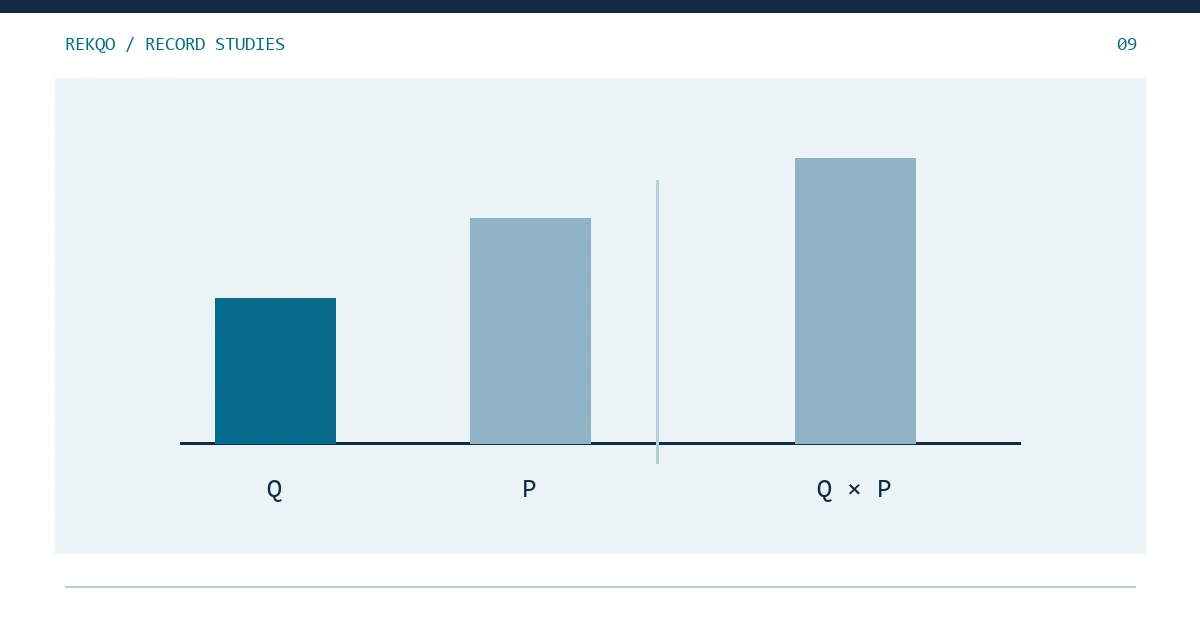
An account value rising from 1,000 to 1,300 does not automatically mean a profit of 300. A new contribution may explain the increase, and it can even conceal a decline in existing holdings. Separate quantities, external funds, prices, and scope before interpreting the total.
All examples below are fictional. They illustrate record keeping, not investment returns, price predictions, or tax calculations.
What does “balance” mean here?
It might mean the quantity of one asset, an estimated value in another currency, or an available portion of one wallet. Confirm that the two numbers you compare describe the same thing.
One unit of an asset and its estimated value of 100 currency units are different dimensions. Quantity can stay unchanged while value moves, or quantity can increase while value falls. Account totals may also reflect debt, restricted amounts, or product-specific items.
Record each observation's date, time, account scope, and valuation currency. A matching currency symbol is not enough to make two totals comparable.
Change one: external funds enter or leave
Contributions increase assets in the scope but are not automatically profit. Withdrawals reduce the scoped balance without automatically representing an investment loss.
| Item | Reference units |
|---|---|
| Opening value | 1000 |
| Contribution | +300 |
| Withdrawal | −100 |
| Closing value | 1200 |
The 200 increase is fully explained by net contributions in this simplified example. “External” depends on the ledger boundary: a receipt from another wallet you own still enters the current scope if that wallet is excluded.
Retain actual flow times. A contribution early in the month has a different exposure period from one made at the end. Equal net contributions do not establish equal investment experiences.
Change two: prices and valuation times
Unchanged asset quantities can have changing reference values. Record the price source and observation time before comparing valuations.
Suppose a fictional holding remains at 2 units while the reference price moves from 50 to 60 per unit. Its estimated value rises from 100 to 120. That does not show a completed sale or guarantee execution at that reference price.
A closing reference price and a later live quote are different conventions. Use a consistent method when possible; otherwise describe the limitation rather than relying on extra decimal places to suggest precision.
Change three: quantities and actual activity
Trades, conversions, fees, rewards, and supported adjustments can change individual asset quantities. Explain them from original records before assigning an economic meaning.
Exchanging one asset for another may greatly increase the received asset's balance, but the paid asset also left. A fee may affect a third unit. Looking only at the receiving side can make an exchange resemble new wealth.
Record rewards when the actual activity is supported, rather than adding an advertised maximum to today's balance. Unknown positive entries can remain unclassified while their source is investigated.
Change four: the comparison scope expands
Adding an account or wallet can increase the displayed total without new activity. Explain that scope change separately.
If a fictional first report contains wallet A's 100 units, and a later report also includes B's 40, the total becomes 140. The extra 40 reflects broader coverage, not assets suddenly earned at the observation time.
Display grouping matters too. Smaller assets may be combined or omitted in one view. Obtain suitable detail before concluding that a shorter report proves assets disappeared.
Can you subtract contributions from the balance change?
With consistent scope, timing, valuation, and complete flows, it can be an initial explanatory difference. It is not automatically a precise return rate or tax result.
Fictional opening value is 1,000, contributions 300, withdrawals 100, and closing value 1,250. Removing the net contribution leaves a reference difference of 50. That calculation does not establish when each change occurred, whether gains were realized, or which performance method is appropriate.
Real records may include liabilities, fees, uncertain prices, and missing activity. Mark the assumptions and call the result what it is: a reference difference requiring explanation.
Should you reconcile quantities before studying a chart?
Yes. Quantities can be traced to events; valuation and performance analysis depend on those quantities plus additional assumptions.
Check openings, inflows, outflows, and actual closings by asset. Confirm that internal movements were not treated as new external funds and that fees were not deducted twice. Then add a consistent reference valuation if needed.
Price changes do not explain an unexplained extra unit of the same asset. Conversely, matching quantities do not mean that market value stayed constant. Keep those two checks distinct.
What should a month-end summary say?
Separate quantity status, external flows, reference valuation, and unresolved issues.
- Which accounts and assets have been reconciled?
- Which contributions and withdrawals cross the chosen boundary?
- Which dates, currency, and sources define the valuation?
- What records or interpretations remain uncertain?
“Reference value rose, partly because of contributions; one quantity gap remains” helps determine the next task without pretending to provide a complete performance result.
Why is one screenshot insufficient?
A screenshot usually omits intermediate flows and full scope. It preserves an observation, not an entire history.
The same limitation applies to other people's balance-growth images. Contributions, withdrawals, account changes, and pricing conditions may be invisible. Do not infer verified returns or increase risk to imitate a screenshot. Crypto assets can lose all invested value; record keeping does not remove that risk.
Preserve your own screenshots alongside their scope and source information. An unsupported old number can remain a historical observation without being rewritten as a verified return.
When is further professional judgment needed?
Tax filings, legal disputes, business accounting, and complex product equity may require an appropriately qualified professional applying local rules to complete evidence.
Provide originals, flow explanations, valuation conventions, and known limitations rather than only a self-calculated profit figure. The assumptions matter as much as the formula.
What if two observations on one day differ?
Check intervening activity and price refreshes. Sharing a calendar date does not mean sharing an observation time.
Confirm unchanged quantities from records before attributing all movement to prices. For month-end snapshots, choose and document a definite time rather than selecting whichever screenshot looks best. It is also acceptable to stop at quantity reconciliation and archiving until the evidence needed for a more detailed analysis is available.